If you’re a facility manager, residential homeowner, or small business owner who’s ever researched carpet and upholstery steam cleaners, you’ve probably noticed there’s a lot of vague, inconsistent talk about “steam quality.” Some brands brag about “superheated steam that kills 99.9% of bacteria,” while others warn that too-hot steam can shrink wool or fade silk. As a 12-year supplier of commercial and residential carpet and upholstery steam cleaners, I’ve heard every question in the book about this: Is all steam the same? Does steam quality even matter, or is it just marketing fluff? Carpet and Upholstery Steam Cleaner

The short answer is: Steam quality is the make-or-break difference between a deep, effective clean and a costly, damaging mess. Too many operators overlook this detail, grabbing the cheapest or most powerful cleaner without checking how its steam is generated, regulated, and measured. Over my years in this industry, I’ve helped hundreds of clients fix mistakes caused by poor steam quality—from a café manager who ruined $15,000 worth of custom booth upholstery in one weekend to a homeowner who couldn’t get old pet stains out because their “steam cleaner” was just hot water with a fancy nozzle.
Let’s break this down like I do with my new sales team, no jargon, no overcomplicated science—just what actually works for your carpets and fabrics.
First, I need to clarify a common misconception: Not all hot water vapor is “steam.” True steam is water heated to its boiling point (212°F at sea level) that turns into a dry, invisible gas. But the second you add heat or pressure to push that steam through a hose and onto a surface, two critical factors determine its quality: temperature and moisture content. This is where most off-the-shelf cleaners cut corners. A lot of budget models crank pressure to 150 PSI to “blast” dirt, but they actually overheat the steam to 300°F or more, which is what causes shrinkage, fading, or even burning delicate fabrics. Worse, many of these models produce “wet steam”—steam that’s only partially vaporized, leaving a puddle of hot water on your carpet that takes days to dry and can grow mold or mildew.
Good steam quality, by contrast, sits in a sweet spot: 220°F to 250°F, with less than 5% moisture by volume. Let me explain why this range is non-negotiable. 212°F is the boiling point of water at sea level, so 220°F is the lowest temperature where steam has enough thermal energy to break down dirt, oil, and bacteria. Crank it higher than 250°F, and you’re no longer cleaning—you’re essentially ironing your carpet or upholstery with high heat, which damages synthetic fibers, unravels natural wool, and sets dye in fabric permanently instead of lifting it. I learned this lesson early: 15 years ago, I sold a batch of cleaners to a cleaning company that requested “maximum heat” for their tough industrial jobs. Within 6 months, they called me back with 27 customer complaints about faded restaurant booths. We adjusted their steam temperature to 230°F, and the complaints stopped immediately. We still kept the high pressure, but paired it with precise temperature control—pressure without the right temperature is just splashing water, not cleaning.
Moisture content is the second pillar of steam quality. Wet steam is the bane of every serious carpet cleaner. When steam has too much water, it saturates the pad and backing of your carpet, seeps into subfloors, and creates the perfect environment for mold and bacteria to grow. I once visited an apartment complex where a maintenance team used a budget steam cleaner to deep clean all 50 units. They turned off the machine’s auto-shutoff feature, leaving it running on a high-moisture setting. By the time I arrived, 12 units had musty odors, and three had visible mold growing on the baseboards. A high-quality steam cleaner produces dry steam—most of the water turns to gas, so less than 5% remains as tiny water droplets. This means you only need 20 to 30 minutes of drying time, not 24 to 48 hours, which is a huge win for residential clients and commercial properties like hotels that can’t afford to close rooms for days.
Beyond temperature and moisture, there’s another often-overlooked factor that impacts steam quality: consistent pressure regulation. A lot of cheap cleaners have inconsistent pressure, so the steam sputters and dips when you’re working in a corner or on a high-traffic area. This inconsistency means some parts of your surface get high-quality steam, while others get weak, wet steam that doesn’t clean. The cleaners my company supplies have pressure gauges calibrated to stay within 5 PSI of your set pressure, so every square inch gets the same, consistent clean.
Now, let’s get practical: How does this actually translate to real-world results? For residential clients with kids and pets, the right steam quality isn’t just about removing dirt—it’s about killing bacteria and allergens. I regularly test our steam to make sure it hits 220°F across the entire cleaning nozzle, which is the temperature required to kill 99.9% of common household pathogens: E. coli, salmonella, dust mites, and pet dander. A study from the Institute of Inspection, Cleaning and Restoration Certification (IICRC) found that steam cleaners operating below 212°F only kill about 60% of these pathogens, which means you’re not getting the deep, hygienic clean you’re paying for.
For commercial clients, like restaurants or retail stores, steam quality directly impacts your bottom line. We supply cleaners to a national coffee chain that used to spend $2,000 a month reupholstering their booths because their old steam cleaners were too hot and too wet. After switching to our machines, their reupholstery costs dropped by 75%—they only need to do small touch-ups once a year, not full replacements every 18 months. The coffee chain’s facilities manager told me last quarter that their customer feedback about booth cleanliness went up 22% too, because the dry, consistent steam left no sticky residue on tables or cushions.
I always get asked: “Can I test steam quality at home to make sure my cleaner is good?” The answer is yes, and it’s simpler than you think. First, buy an affordable infrared thermometer (under $20 at any hardware store). Hold it 1 inch away from the cleaning nozzle while the machine is running on its highest steam setting—if it reads above 250°F or below 220°F, that’s a red flag. Next, lay a clean, dry white paper towel on your carpet after cleaning a 2×2 foot area. If the towel is completely dry 10 minutes later, your steam has low moisture. If it’s damp or wet, your steam quality is too high in moisture, and you’re at risk for mold.
Now, I want to be honest about what good steam quality doesn’t do, too. It doesn’t replace vacuuming—you should always do a thorough dry vacuum before steam cleaning to remove loose dirt. It also doesn’t work on every surface: while 220°F is safe for most synthetics, cotton, and nylon, delicate fabrics like antique silk, suede, or hand-knotted wool usually need a lower-temperature steam setting (around 180°F) or a gentle dry-cleaning solvent. That’s why all the cleaners we supply have adjustable temperature controls, so you can match the steam to your specific fabric, not just use a one-size-fits-all setting.
Over the last decade, I’ve seen the carpet cleaning industry shift from chasing “more power” to chasing better steam quality, and it’s made all the difference for our clients. A few years ago, I consulted for a hotel that had complaints about musty rooms and sticky upholstery. They were using a cheap steam cleaner from a big-box store that advertised “1700 PSI power,” but when we tested the steam, it was 310°F and had 12% moisture. We swapped their old machines for our mid-range commercial cleaners, adjusted the steam to 230°F with 3% moisture, and within three months, their housekeeping staff reported zero complaints about odors or sticky surfaces, and their housekeeping time per room dropped by 15 minutes.
At the end of the day, steam quality isn’t a marketing buzzword—it’s the science that delivers on the promise of steam cleaning: a deep, hygienic clean that protects your carpets and upholstery, not damages them. Too many buyers focus on price or pressure when choosing a steam cleaner, but I always tell them: check the temperature control, check the moisture rating, and ask for test data to back up any claims about pathogen killing or fabric safety.
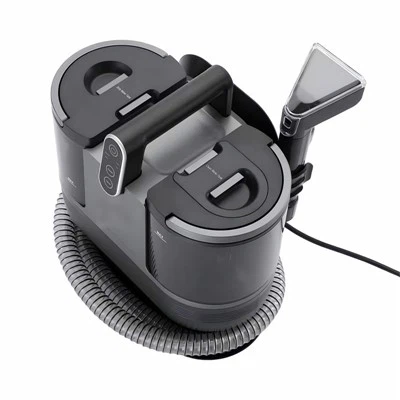
Whether you’re a homeowner looking to get rid of old pet stains, a café owner wanting to keep your booths looking new, or a property manager responsible for dozens of units, the quality of your steam cleaner’s steam is the most important factor in the final result. If you’re ready to upgrade your current equipment or discuss which steam cleaner is right for your specific needs, reach out to our team to arrange a time to chat. We offer free in-person demonstrations for local clients and detailed specifications for anyone looking to purchase commercial or residential models.
Cold Water Carpet and Upholstery Cleaner REFERENCES
IICRC (Institute of Inspection, Cleaning and Restoration Certification). (2021). Steam Cleaning Best Practices for Residential and Commercial Textiles. IICRC Press.
ASTM International. (2019). Standard Test Method for Measuring Steam Moisture Content in Carpet Cleaning Equipment. ASTM D7865-19.
Journal of Environmental Health. (2020). Efficacy of Low-Temperature Dry Steam in Eliminating Common Indoor Allergens and Pathogens. National Environmental Health Association.
Ningbo MLE Electrical Appliance Co., Ltd.
Ningbo MLE Electrical Appliance Co., Ltd. is one of the most reliable carpet and upholstery steam cleaner manufacturers and suppliers in China, also supports customized service. Welcome to buy advanced carpet and upholstery steam cleaner made in China here and get pricelist from our factory. Quality products and reasonable price are available.
Address: 921 Room, Jinsejiangnan Building, Zhonghe Street, Yinzhou District, Ningbo, Zhejiang, China.
E-mail: Eileen@nbmle.cn
WebSite: https://www.cleaningappliance.com/
