Alright, let’s cut to the chase: if you’re ordering research peptides lately, you’ve probably been stuck on whether you actually need a license to use ’em. As a research peptide supplier that’s worked with academic labs, biotech startups, and even small pharma teams for years, I see this question ALL the time—way more than I thought I would when we first launched. Let’s break this down straight, no stuffy jargon, just what you actually need to know. Research Peptide
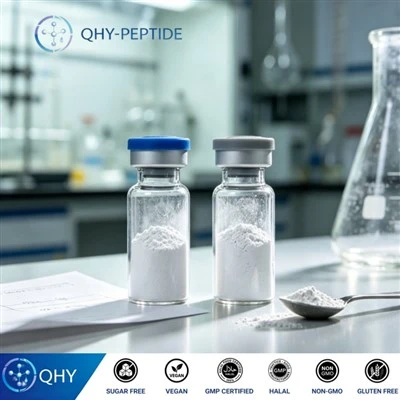
First off, let’s clear up the big mix-up: research peptides aren’t the same as anabolic steroids or unregulated “supplements” you see at GNC. Wait, no—wait, hold on, they’re not the same as prescription injectable drugs either. That’s the core confusion here. A lot of people come to us panicking because they heard the FDA or some regulatory body is cracking down on peptides, and they think they need a special license just to order or use ’em for their lab experiments. Let’s start with the basics: what’s the legal status of research peptides vs. other types?
First, let’s define what we sell. Our research peptides are strictly for in vitro or in vivo lab research—think cell culture studies, animal trials, lab experiments to test binding affinity, not for human consumption, not for personal use, not for making products to sell to people. That’s a key line in the sand. Now, regulatory bodies: in the US, that’s FDA, DEA, maybe the NIH’s Office of Laboratory Animal Welfare (OLAW). In the EU, it’s EMA, plus national regulatory bodies like the UK’s MHRA. Let’s go region by region because this varies—no one-size-fits-all, which is why so many folks get tripped up.
In the US: If you’re a university lab, a registered biotech company, or a private research institution, do you need a license to use research peptides? Short answer: usually not a specific peptide license, but you DO need the right credentials for your lab. Wait, let’s clarify: The DEA regulates controlled substances, but most research peptides aren’t controlled substances. The only time a peptide hits DEA’s radar is if it’s a variant that’s been modified for misuse (like certain growth hormone secretagogues that bodybuilders abuse), but for the peptides we sell—standard research-grade ones like BPC-157, TB-500, GLP-1 analogs for research only, etc.—they’re not DEA-controlled. But here’s the catch: your lab has to be registered with whatever agency applies. If you’re working with animals, you need an IACUC (Institutional Animal Care and Use Committee) approval— that’s a committee at your university or company that checks your animal protocols, not a license we issue. If you’re working with cell lines or human samples (even de-identified ones), you might need IRB (Institutional Review Board) approval, but again, that’s for your research, not a peptide-specific license. A lot of our first-time buyers from US universities ask, “Do I need a license to order?” and the answer is: no, not a peptide license, but you do need to be a legitimate research entity—meaning you’re not a random person off the street trying to buy for personal use. We don’t sell to individuals without lab affiliation, which is how we stay on the right side of the law.
Now, the EU: It’s a bit different because of REACH (Registration, Evaluation, Authorization, and Restriction of Chemicals) regulations. Wait, REACH covers chemicals, and research peptides are considered chemical substances when used in research. Do you need a license to use them? Again, not a peptide license, but you might need to register your lab with your national competent authority if you’re handling larger quantities—like if you’re ordering 10+ grams for in vivo trials vs. 1mg for small cell culture tests. Some countries, like Germany, have stricter rules for peptide handling, requiring labs to have a “laboratory authorization” but that’s general lab certification, not specific to peptides. We’ve got clients in Germany who say their lab’s standard license covers it, no extra hoops. The UK post-Brexit is similar but has its own rules from MHRA, same vibe: general lab registration, no peptide-specific license.
Wait, but why do some suppliers make it sound like you need a license? Oh, right—there’s a difference between research-grade peptides and peptides that are labeled “for human use.” If a product says “for human consumption” or “for therapeutic use,” that’s a drug, and you need a FDA or EMA approval, plus a prescription, but that’s not what we sell. We always label every vial clearly: “Research Use Only, Not for Human or Animal Consumption.” That’s non-negotiable for us, because it keeps our clients compliant. A lot of the confusion comes from sketchy suppliers who cut corners—they sell peptides as “anti-aging” supplements, which are unregulated, and then tell customers they need a license, but that’s a lie to scare people. We’re the opposite: we tell you exactly what you need to stay legal, no hidden hoops.
Now, let’s talk about when you might need extra credentials, even if it’s not a license. Let’s say you’re doing animal studies with a peptide that’s designed to affect hormone levels—like a GLP-1 agonist for diabetes research. OLAW in the US requires that your lab follows specific protocols for handling biologics, which might mean you have to do some training, but again, that’s lab training, not a license. Or if you’re collaborating on a clinical trial—wait, a clinical trial is different. If you want to test your peptide on humans, you need an IND (Investigational New Drug) application with the FDA, and that’s a whole big process, but that’s not using research peptides for lab experiments. That’s moving from research to drug development. A lot of our clients don’t realize that line—they think ordering 5mg of a peptide for a mouse study is the same as getting approval for human trials, and it’s not.
Wait, let’s throw in a real example to make this concrete. Last quarter, we had a PhD student from a big public university in California reach out. He was working on a muscle repair project with BPC-150 (wait, no, BPC-157) for his thesis. He asked, “Do I need a license to use this for my animal trial?” We walked him through: his lab had IACUC approval, he was ordering for a university project, so no extra license needed—just that he had to document the use for his lab’s inventory, which is standard. A month later, we had a guy from a startup that makes pet supplements reach out, asking to order 50g of TB-500. We had to tell him: if he’s using it for pet trials, he needs a veterinary drug license from the FDA’s Center for Veterinary Medicine, because that’s for animal consumption (even if it’s pets, not humans). That’s a case where he did need a specific license, but it’s for the end use, not the peptide itself. So the key here is: the license depends on WHAT you’re using the peptide for, not just owning it.
Another common question: Can a student order peptides? We get this all the time. As long as the student is ordering on behalf of their university lab, has a faculty advisor, and the order is for a research project, no license needed. We don’t require the student to have a license, just that the lab is a registered research entity. We once had an undergrad who interned at a biotech company order a small amount for a summer project, and that was totally fine. The only time we turn someone down is if they can’t prove they’re not a random individual ordering for personal use—like a guy who said he “heard peptides help with workout recovery” and wanted to order 10g of TB-500. We had to tell him: that’s personal use, which our peptides aren’t for, and he’d need a prescription from a doctor if he wanted to use that stuff, but we can’t sell to him because it’s for research only. That’s the line we draw to stay compliant, and it’s why our clients trust us.
Now, let’s address the “why do regulations matter anyway?” It’s not just red tape. The reason there’s confusion around peptide licenses is because unregulated peptides are often misused. A few years back, there were a bunch of cases of people buying unapproved peptides online, using them for human growth, and having adverse effects—so regulators clamped down on labeling, not just on licenses. That’s why we label every vial clearly, and we only sell to legitimate research facilities. So even if you don’t need a license to use the peptides for your lab, following the rules is important for your research’s credibility. If you get audited by the FDA or DEA, you need to prove you used the peptides for research, not for something else, which is why keeping good inventory records is key.
Wait, let’s bust a myth here: Some people say “all peptides require a DEA license.” That’s not true. The DEA’s controlled substance list only includes peptides that are Schedule III or higher, like certain synthetic growth hormones. Most research peptides are not controlled. We can even give you a list of our most common peptides and their DEA statuses if you need it—just reach out. For example, BPC-157 is not a controlled substance, TB-500 is not, most GLP-1 research peptides are not. The only exception is if you’re using a peptide that’s a derivative of a controlled substance, but that’s super rare for standard research use.
So to sum up: Do you need a license to use research peptides? 9 times out of 10, no, not a peptide-specific license. But you DO need: 1) To be a legitimate research entity (university, biotech, pharma lab) not an individual for personal use, 2) Any required lab registrations (IACUC, IRB, REACH) for your region and type of research, 3) Clear labeling and record-keeping that shows you’re using the peptide for research only, not human or animal consumption for non-research purposes. The only time you’ll need a license is if you’re moving into therapeutic use (human or animal trials, supplements) which is a whole separate process from basic research.
Now, if you’re still not sure—like, if you’re setting up a new lab, or you’re ordering a larger quantity than usual, or you’re working with a peptide that has specific regulatory concerns—don’t guess. A lot of labs waste time trying to navigate this on their own, which can delay their projects. We work with researchers every day to figure out exactly what’s required for their specific use case. We’ve helped PhD students, startup R&D teams, and even small pharma labs make sure they’re compliant without jumping through unnecessary hoops.
If you’ve got questions about ordering research peptides, what credentials you need, or just want to confirm that the peptides you’re using are compliant, hit us up to chat. We’re not here to give you a runaround—we’re a supplier that’s been around long enough to know the ins and outs of peptide regulations, and we’ll tell you straight what you need to do to stay on the right side of the rules. Just reach out to start the conversation.
Lab Peptide References:
- U.S. Food and Drug Administration. (2024). Research Use Only Products: Compliance Policy. Retrieved from FDA.gov.
- European Chemicals Agency. (2023). REACH Regulation for Chemical Substances in Research. Retrieved from ECHA.europa.eu.
- U.S. DEA Diversion Control Division. (2024). Controlled Substances List: Peptide Derivatives. Retrieved from DEA.gov.
- Office of Laboratory Animal Welfare. (2023). IACUC Requirements for Research involving Vertebrate Animals. Retrieved from OLAW.nih.gov.
QHY Bioengineering Co., Ltd.
QHY Bioengineering Co., Ltd. is one of the most professional research peptide manufacturers and suppliers in China. Please feel free to wholesale advanced research peptide made in China here from our factory. All customized products are with high quality and competitive price. Contact us for pricelist and free sample.
Address: Luoyang City, Henan Province, P.R.China
E-mail: manager1@qhy-bioengineering.com
WebSite: https://www.qhy-bioengineering.com/
