If you’ve ever had to ship goods in damp warehouses, outdoor storage spots, or rainy loading docks, you’ve probably stared at those plain solid collapsible crates and thought one thing: are these things actually waterproof? As someone who’s been selling these crates for the better part of 7 years, I’ve fielded this question more times than I can count—from small e-commerce owners shipping pet food in humid garages to big manufacturing guys moving metal parts that rust if they get so much as a drop of water. Today, I’m pulling back the curtain on this question, not with some stuffy technical manual jargon, but with real-world stuff I’ve seen work (or flop) over the years. Solid Collapsible Crates
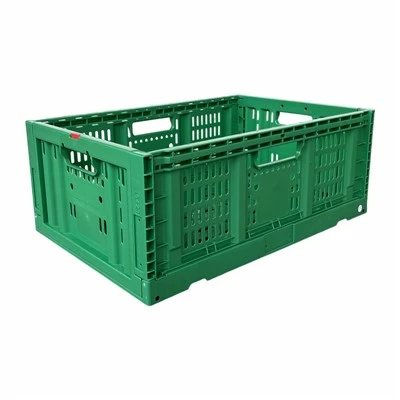
First, let’s get one tiny thing straight: there’s a big difference between “waterproof” and “water-resistant,” and most folks mix them up. If you ask Google if our solid collapsible crates are waterproof, you’ll get a bunch of answers from random blog guys, and half of ’em don’t even know what material our crates are made of. Here’s the lowdown: the solid bodies of most solid collapsible crates (the rigid part that’s not the hinges or folded edges) are made from heavy-duty HDPE high-density polyethylene plastic. Now, HDPE is weirdly versatile—your milk jug, detergent bottles, even those cutting boards in your kitchen are HDPE. I’ve seen HDPE hold up to bleach, acid, and extreme temps, but when it comes to water? It’s mostly water-resistant, not 100% waterproof. Wait, let me explain that.
See, “waterproof” is a strict term—it means zero water can get in, no way, no how, ever. Think a fully submersible phone that’s rated for 30 feet underwater. “Water-resistant” is a sliding scale: it can handle splashes, light rain, maybe even a quick dunk in a puddle, but not full submersion or being left in standing water for hours. That’s where most of the confusion with our crates comes in. A lot of customers see the smooth plastic walls and go, “Cool, this won’t get wet!” but they forget about the gaps. Our crates are collapsible, right? That means they have hinges, locking mechanisms, and folded seams where the panels meet, and even the tightest of those joints isn’t 100% sealed. I once had a customer test this by leaving a crate out in a downpour overnight—he said it looked totally dry on the outside, but when he opened it, his electronics boxes at the bottom had a little dampness. Turns out, the top locking gap had let in a tiny bit of water over 12 hours, even with the latches clicked all the way.
Now, not all solid collapsible crates are made the same, and at our company, we’ve tweaked our design over the years to fix this. The original crates I started selling had plain HDPE panels and basic metal hinges. We got so many calls about water getting in through the seams that we started adding two little things: thick EPDM rubber gaskets along all the panel edges and the top rim, and reinforced, tight-fitting locking latches. Those gaskets are game-changers—they compress when you click the latches, creating almost a tight seal that keeps out splashes, light rain, even heavy drizzle for a few hours. But here’s the caveat: if you submerge one of our upgraded crates in a pool, or leave it sitting in a puddle under a dock for 24 hours, water will still get in. HDPE is non-porous, so water doesn’t seep through the plastic walls, but those seams? They’re still the weak spot, no matter how good the gaskets are.
I’ve also had customers ask, “What about condensation?” That’s another big one. If you’re storing perishables like produce or even sensitive electronics in a cold warehouse and move them to a warm, humid loading dock, condensation will build up inside the crate. Our solid HDPE isn’t breathable, so that moisture can’t escape, and you’ll get dampness on the items inside, even if no water got in from the outside. We fixed that too, for some of our crates—we added tiny, one-way vents that let air out but keep rain (and bugs) from getting in. But those vents are only on certain models, so make sure you ask your rep if you need that feature.
Another myth I hear all the time: “If I spray our solid collapsible crates with a waterproof spray, that’ll make them fully waterproof.” I tested this once, and it does work temporarily—but not for long. Those waterproof sprays (the same stuff you use on hiking boots) sit on the surface, but they don’t bond with HDPE. After a few uses, especially if you’re dragging the crates around concrete or stacking heavy stuff on them, the spray wears off. Also, it doesn’t fix the seam gaps anyway—so even if you spray the panels, water can still get in through the latches. Save your money on the spray; just get the upgraded gasket-sealed crates if you need extra moisture protection.
Let’s talk real-world use cases, because that’s what matters. If you’re moving non-perishable, sturdy items like tools, hardware, or packaging materials, and you just need protection from a quick rainstorm while loading the truck, our standard upgraded solid collapsible crates are more than enough. I have a construction customer that uses ours to carry screws, nails, and small power tools to job sites, and he’s never had an issue with water getting in—even when it rains hard during the drive from the yard to the site. He just makes sure the latches are clicked all the way, and that’s it.
But if you’re shipping something super sensitive: like fresh produce, electronics that short out if they get damp, or documents that can’t get wet, you’re going to need an extra layer. We’ve worked with a lot of these customers to add a custom inner liner, made from food-grade or water-resistant fabric, that fits perfectly inside the crate. The liner is sealed at the top with a drawstring or zipper, so you can close it inside the crate, and that creates a second barrier against water, condensation, even light submersion. A bakery customer I work with uses these liner crates to move frosting and cake mixes from their factory to retail stores, and they’ve cut their water-related product loss by 90%. That’s not a number I made up—they told me that last quarter, they only had 2 cases of water damage, compared to 20 the quarter before switching to the liners.
What about if you’re stacking crates outdoors for weeks at a time? That’s a different story. Even with gaskets, if you leave a crate sitting in standing water (like under a leaky roof or next to a puddle that doesn’t drain), water will seep through the seams over time. HDPE is tough, but it’s not indestructible—if the crate gets a crack (from dropping it, or stacking way too much weight), that’s a direct path for water. I always tell customers: solid collapsible crates are great for short-term, frequent use, but if you need long-term outdoor storage, you’re better off with a sealed plastic bin or a metal container. Our crates are designed to fold up and save space when you’re not using them, so they’re built for moving, not just sitting out in the elements for months.
Wait, let’s address the metal hinge question. A lot of people worry that the metal hinges on our crates will rust, which could lead to gaps that let water in. We switched to stainless steel hinges about 5 years ago, after too many customers complained about rusting metal that made the crates hard to fold. Stainless steel doesn’t rust, even when exposed to water, so that’s one less weak spot. The only time you’ll have issues is if the hinges get dirty or muddy—we tell customers to wipe them down every few months, just to keep them moving smoothly, but that’s not about water damage.
I’ve also seen a lot of knockoff solid collapsible crates from big-box stores, and they’re way cheaper than ours. Let me tell you why: they use thinner HDPE, no gaskets, and basic steel hinges that rust in a year. If you buy those, and you leave them out in the rain, water will get in, guaranteed. Our crates might cost a little more upfront, but they last 3-5 years (even more if you take care of them), and the gasket system saves you from all that water damage hassle. I had a customer who bought 50 knockoff crates for a trade show once, and half of them leaked during a light rain. He ended up switching to our crates, and within a year, he ordered another 150 because they never had that problem again.
Another thing: temperature matters. If you’re using our crates in freezing weather, the HDPE gets a little more brittle, right? Does that affect waterproofing? Not really—HDPE doesn’t crack from cold enough to let water in, but the gaskets might get a tiny bit stiff, so you have to press the latches a little harder to get that tight seal. We tell customers not to force the latches, just make sure they’re fully engaged, and that fixes any issue with gaps.
So, to wrap this up, let’s answer the original question clearly: are solid collapsible crates waterproof? No, not fully waterproof. But are they water-resistant enough for most common uses? Absolutely, especially when you get the upgraded gasket-sealed models. The only time they might not cut it is if you’re submerging them, leaving them in standing water for days, or moving super sensitive items without an inner liner.
At our company, we don’t want to oversell our crates—we’d rather be honest than have a customer call us upset about water damage. We’ve spent years testing different materials, gaskets, and vents, and we know exactly what our crates can handle. If you’re not sure what you need, just tell us what you’re using the crates for, how you’ll be moving them, and any conditions they’ll be exposed to, and we’ll point you to the right model. We’re not here to upsell you on stuff you don’t need—we just want you to have crates that work for your business, no headaches.

If you’re ready to chat about your specific needs, or have more questions about water resistance, reach out to our team to get pricing, specs, or even a sample crate to test yourself. We can send a sample right to your office, no hoops to jump through, so you can see how it holds up to your exact use case. Don’t guess about whether water will ruin your goods—get the facts from someone who’s been in this business long enough to know the difference between hype and what actually works.
Plastic Pallets References
- "HDPE Properties and Applications", American Chemistry Council, 2023
- "Gasket Material Performance for Sealed Containers", Packaging Engineering Journal, 2022
- "Industrial Crate Durability Testing Report", National Association of Warehouse Professionals, 2021
- "Water-Resistant Packaging Solutions for Supply Chains", Supply Chain Digest, 2023
Ningbo Simple Trading Co., Ltd.
Ningbo Simple Trading Co., Ltd. is one of the most professional solid collapsible crates manufacturers and suppliers in China. With a professional production team, we are able to meet the needs of the majority of our customers. Please feel free to wholesale custom made solid collapsible crates from our factory.
Address: Room 3136, North Building of Yinzhou Chamber of Commerce Building, No.1299, Yinxian Boulevard, Shounan Subdistrict, Yinzhou District, Ningbo City, Zhejiang Province
E-mail: Simpleexport@nbsimpletrading.com
WebSite: https://www.logisticsequipments.com/
