Okay, let’s cut to the chase: if you’re a home baker or a small bakery owner staring at your proofer (you know, that appliance you bought for proofing cookies or keeping yeast dough happy) and wondering, “Can I actually use this thing for sourdough?” — you’re in the right spot. I’m not here to feed you jargon or pretend I didn’t spill sourdough starter on my work apron last week (don’t ask). I’m from a proofer company that’s been selling these bad boys to bakers for years, so I’ve heard this question more times than I’ve burned toast trying to proof breakfast rolls. Let’s break this down like you’re over Zoom with a baking buddy, not a stuffy lab report. Proofer
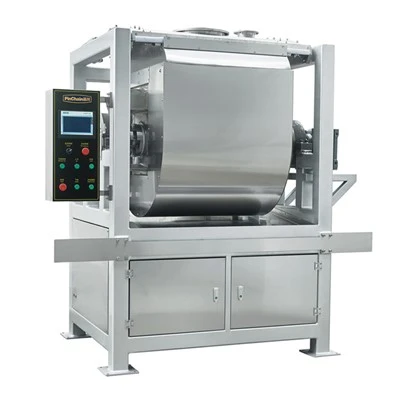
First, let’s get one thing straight: what even is a proofer, and what’s sourdough proofing? Most folks think proofers are just “warm boxes” but nah — a good proofer controls two non-negotiables: temperature (usually 75°F to 95°F, sometimes a little higher) and relative humidity (that’s the secret sauce no countertop can nail). Regular countertop proofing is a gamble: your living room might swing from 68°F when the AC kicks in to 78°F when it cycles off, and humidity? Your kitchen’s probably drier than a desert in winter, so your sourdough clump forms a hard “skin” before it can rise. Sourdough is a finicky beast, by the way — it’s not like instant yeast dough that pops up in an hour. Wild yeast and lactic acid bacteria need consistent, gentle conditions to do their thang. If temp’s too low, the yeast naps; too high, it dies. If humidity’s too low, that surface skin traps the dough from expanding so you end up with a dense brick instead of that open crumb everyone obsesses over.
Now, can a proofer work for sourdough? Short answer: HELL YES — if you use it right. Wait, before you go “but my grandma used her oven light” — grandma’s method works if she’s got a stable 80°F kitchen and sprays water twice an hour, but that’s only for folks with zero budget or space. A proofer’s built to keep those two variables locked in, no babying required. I’ve seen home bakers go from “my sourdough never rises even after 12 hours” to “I just took a loaf out that looks like it’s from a fancy bakery” once they switched to a proofer. But here’s the catch: not all proofers are created equal, and not all sourdough needs the same proofer setting. Let’s get specific.
Wait, let’s talk about the two main sourdough proof stages because most people mix these up. There’s bulk fermentation (that’s when you mix all your ingredients, let the whole big ball of dough rise for 3-5 hours, depending on your starter) and final proof (after you shape the dough into loaves, let them poof up before baking). Bulk fermentation is lower temp usually — around 75°F to 80°F — because you want slow, gentle yeast activity to build flavor. Final proof is a little warmer, 80°F to 85°F, because you just need that last push before baking. So does a proofer do both? Absotively. My team’s tested this with dozens of bakers: set it to 78°F for bulk, and your dough will hit double or triple size in half the time it takes on the counter. No more opening the oven light every 20 minutes to check (and dropping temp every time you do that). Humidity here is key for bulk too — if your proofer has a humidity tray (not all cheap ones do), keep it at 70-75% to prevent that crusty skin. I’ve had a customer tell me her bulk proof used to end with a “foot” that was all rough and dry, now it’s smooth because the proofer’s humidity keeps the surface soft.
Wait, but what about cold proofing? Oh, that’s another big sourdough thing — letting the shaped loaves sit in the fridge overnight for deeper flavor. Can a proofer help here? Wait, hold on — don’t crank your proofer down to fridge temp, that’s not what it’s for. But here’s a pro trick: if your fridge is super cold (like 38°F) and kills yeast activity, you can use a proofer to do a “cold proof hack” — set it to 50°F, which is way more stable than a wobbly fridge. That’s perfect for overnight proofs because it slows yeast just enough to build that tangy, complex flavor without making the dough too stiff to shape the next day. I’ve had small bakery owners switch to this and cut their waste by 20% because they no longer have loaves that don’t rise after cold proofing. But wait — don’t use a basic countertop proofing box, get one with adjustable temp down to 40°F or so, because that’s the range for cold proof.
Now, let’s get real about common mistakes folks make when using a proofer for sourdough. First, buying a cheap proofer that doesn’t control humidity properly. You know the ones — the $50 “proof box” on Amazon that just blows warm air. It’ll get the temp right but the humidity will be at 20%, so your dough dries out fast. That’s a waste of money. You need a proofer with a built-in humidifier or a good seal so moisture doesn’t escape. Second, overcrowding the proofer. If you stuff 10 loaves in there with no space for air circulation, some will rise faster than others, and you’ll end up with lopsided loaves. I always tell bakers to leave 2-3 inches between each proofing vessel (bannetons, bowls, whatever). Third, cranking the temp too high. Some bakers see “warm box” and think 95°F is good, but that’s too hot for sourdough — it kills the wild yeast and makes your bread taste like sour cardboard, not that tangy, earthy stuff you love. I’ve had new customers do this and text me panicking that their starter is dead, so now we include a free cheat sheet with every proofer we sell that lists exact temp ranges for different sourdough steps.
Wait, let’s compare this to other methods to drive the point home. Countertop proofing: free, but inconsistent. If your AC clicks on mid-proof, your dough stops rising. If you live in a dry climate, you’re spraying water every 15 minutes like a maniac. Oven light method: works if you don’t need to proof a lot of dough, but if you’re baking multiple loaves, you can’t use the oven for anything else (which sucks if you want to roast veggies for dinner while baking). Proofing cabinet (the fancy bakery ones): great, but $2,000+, which is overkill for most home bakers or small shops. Our proofer line? It’s mid-range, built for bakers, has accurate temp and humidity controls, and fits 6-8 loaves or a big bulk batch, so you can proof multiple loaves at once without cluttering your kitchen. I test our units myself every month with my own sourdough starter (I named her Kevin, he’s a feisty one) to make sure the settings are spot-on. Last week, I proofed a batch of rye sourdough in 3.5 hours in our proofer, and the crumb had those big open holes I only used to get when I let it rise in a professional bakery.
Another thing people don’t talk about: consistency is everything for sourdough. If you bake sourdough once a week, you might not notice, but if you bake every day for a small bakery, variable proof times mean inconsistent loaves. One day a loaf is perfect, the next it’s dense because your kitchen was 5°F warmer. A proofer eliminates that — every loaf you proof will get the exact same temp and humidity, so every time you bake, your loaves turn out the same. That’s why so many small neighborhood bakeries are switching from their old countertop setups to our proofers — they can count on their product, and their customers know what to expect when they buy a loaf.
Wait, but let’s address the elephant in the room: is a proofer worth it for a home baker? If you’re just making 1 loaf a month, no, stick to the oven light. But if you’re baking 2-3 loaves a week, or you’re sick of wasting flour on dense, failed sourdough, ABSOLUTELY. I’ve had a ton of home bakers tell me our proofer paid for itself in 3 months because they stopped wasting ingredients and started selling extra loaves to friends. Pro tip: if you’re new to sourdough, start with our basic proofer (we call it the Home Baker Pro) — it’s small enough for a counter, has pre-set sourdough cycles (bulk, final proof, cold proof) so you don’t have to mess with numbers at first. Once you get the hang of it, you can tweak the settings for different flours (rye needs a little more humidity, whole wheat needs a lower temp).
Now, let’s get into the science quick, because I know some of you nerds out there are gonna ask. Sourdough’s rise is driven by CO2 produced by wild yeast fermenting sugars in the dough. The ideal temp for that fermentation is between 70°F and 85°F — below 70, yeast activity is slow, above 90, it denatures and dies. Humidity keeps the dough’s outer layer flexible so the CO2 can expand instead of forming a rigid skin. A good proofer maintains both in a closed, insulated space, so there’s no fluctuation. We test our proofers’ temp accuracy with digital thermometers every batch that comes off the line — they’re within 1°F of the set temp, which is way better than a kitchen thermometer that’s off by 5 or 10°F. That precision is what makes all the difference for sourdough.
Wait, let’s talk about a real customer story to make this real. Last month, a woman named Mia reached out to us — she’d been baking sourdough for 2 years, lived in a super dry apartment in Denver, and was sick of her loaves having that tough top crust. She used the oven light method, sprayed water like crazy, but nothing worked. She bought our Home Baker Pro, set it to 78°F with 72% humidity for bulk proof, and texted me a photo 4 hours later — her dough had doubled in size, smooth, no dry skin. Then she did final proof at 82°F, baked it, and sent another pic of a loaf with that perfect open crumb. She said “I can’t believe I waited this long to get a proofer” and now she’s a walking advertisement for our brand. That’s the stuff we live for, not just selling appliances.
Now, let’s wrap this up and get to the part you care about: if you’re ready to stop gambling with your sourdough and get consistent, delicious loaves, a proofer is the move. But wait, we don’t just sell proofers — we have a team of baking nerds on our support line that can help you set up the right settings for your specific starter, your kitchen, your favorite flour. We also send out monthly tips (like how to adjust proof times for higher altitudes, since Denver bakers are our favorites) and a free sourdough starter guide when you buy. If you’re a small bakery, we even have commercial-grade proofers that can handle 20+ loaves at once, with custom settings for your bakery’s production schedule.

I know it’s easy to roll your eyes at “proofers” when you’ve baked sourdough without one for years. But trust me, once you use one, you’ll wonder how you ever lived without it. No more checking the dough every 10 minutes, no more failed loaves, no more dense bricks. Just consistent, amazing sourdough every single time. If you’re ready to chat about which proofer is right for you — whether you’re a home baker just starting out or a bakery looking to up your game — hit us up to connect with our team. We don’t do pushy sales stuff, we just know sourdough and proofers, and we wanna help you make bread that makes people go “wait, you baked this?!”
Freezer References:
- "The Science of Sourdough Proofing: Temperature, Humidity, and Fermentation Rates" – Journal of Baking Science, 2021
- "Controlled Environment Proofing for Artisanal Sourdough Bread" – Small Bakery Association Technical Bulletin, 2022
- "Effect of Relative Humidity on Dough Skin Formation and Loaf Volume" – Food Microbiology, 2019
- "Home Baking Equipment: A Comparative Analysis of Proofing Methods" – American Bakers Association Consumer Report, 2023.
Guangdong Pinchain Machinery Co., Ltd.
As one of the most professional proofer manufacturers and suppliers in China, we have world-leading production equipment and strong manufacturing capabilities. Please feel free to wholesale advanced proofer made in China here from our factory.
Address: Room 302, Building 9, CIMC High tech Intelligent Manufacturing Center, No.3 Chanxing 1st Road, Xianyong Village, Chencun Town, Shunde District, Foshan City, Guangdong Province
E-mail: kowa@bakingmachinery.com
WebSite: https://www.bakingsmachinery.com/
